


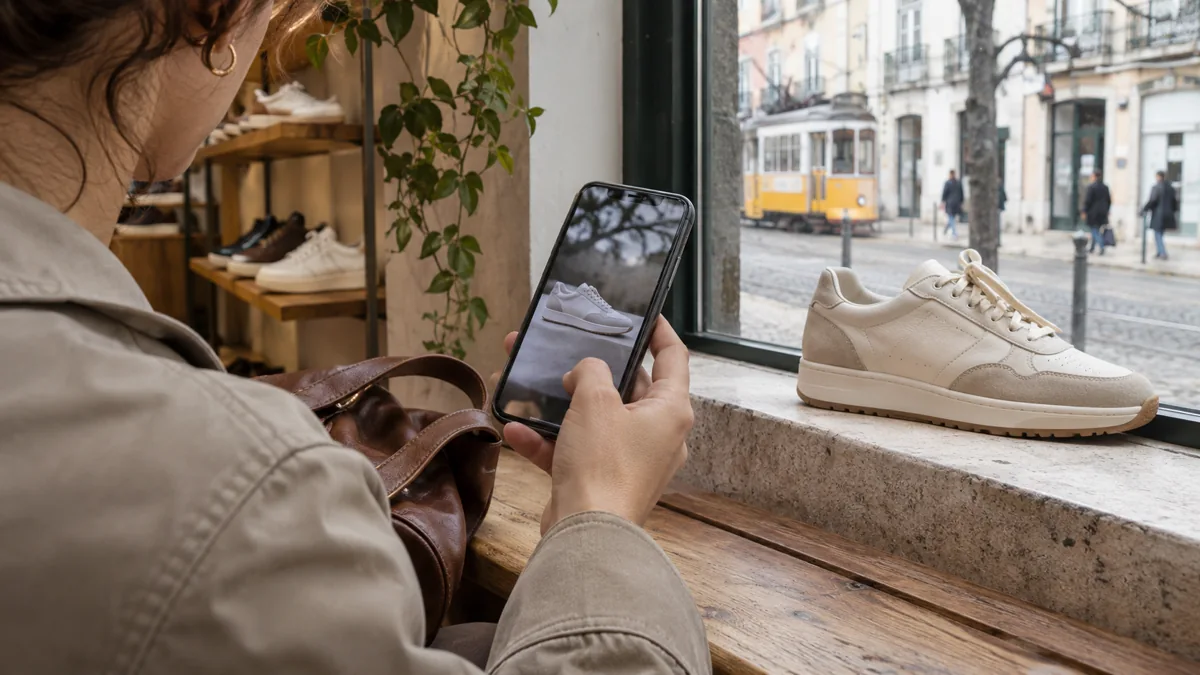
A customer sees a lamp in a brand video, sends the link to someone and returns to the store two days later via Google. However, she measured the table and already knows she wants the smaller model. The purchase started in the video. To conclude, she needs to find the right variant, confirm the dimensions and know when it arrives.
It is an illustrative route, but it helps to understand the work of the store before payment. The first visit can serve to discover the product, the second to compare it. In 2025, about 74% of internet users in Portugal made online purchases in the 12 months prior to the survey, compared to 78% in the EU, according to the Eurostat. The survey measures the adoption of online purchase. The first contact with the brand is a question for the data and customers of each store.
From a post to the product page
Anyone who searches for the name and size of a model has already been part of the choice. In the search for a ceramic walker 30 cm, for example, the measures are of interest on the first screen. If the advertisement shows the 30 cm variant and opens the 45 by default, the buyer has to find out why the price changed. On the mobile phone, he may not even realize that he has entered the wrong variant.
One way to test this ticket is to open the same link that the customer opens, on a mobile phone and without login. See if the page loads with the announced color and size, if the reference is in stock and if the price matches. For stores with various versions of the same article, Google documentation on variants explains how to give each option an address that preselects it. This address can also be used in a campaign or in a conversation with customer support.
On social media, the discovery usually starts with the image, demonstration or answer to a question in the comments. The description can give the exact name of the model and the link can open the corresponding form. It is worth doing the same in the answers by message. A link to the variant helps those who will return to the purchase later, especially when the store has several articles with nearby names.
The question that stops a shopper
The customer who compares two lamps needs to know the height, the length of the cable and whether the lamp is included. Who buys some sneakers wants to understand how the size indicated translates in the length of the foot. Questions change from product to product. Service and return reasons help to find out which ones appear more often.
Choose a traffic record and first review the questions already received. If three customers have written to see if a table includes the mounting screws, add this information next to the features and show in a photograph what comes in the box. For products that require assembly or compatibility, also indicate the concrete limits. ‘Compatible with caps up to 4 cm’ helps to decide before placing the item in the cart.
Then comes the delivery. A useful time has to match the destination and the variant. A forecast for Lisbon can change when the buyer chooses an address in the Azores. An item announced as available may also have a color made by order. European guidelines on procurement and contracts indicate the information that the seller must provide before purchase, including the total price, charges and delivery conditions.
When the customer comes from more than one channel
If the lamp client returns for search and purchase, the report may credit the search according to the store’s assignment rules. Video and private conversation may have helped without appearing in the report. Add to the source data an optional question, presented after purchase, about where you heard about the product. The two answers describe different parts of the route.
To find a specific problem, follow a reference during the campaign. Compare how many visits arrive to the chart, how many select the announced variant and how many advance to the cart. Also read the messages received about this reference. If the visits increase and the attendance receives several questions about delivery to the islands, it is worth putting the estimate of ports and deadlines closer to the price and back to follow the same step.
The commitment shown in the form must follow the order. In the confirmation email, include the chosen variant and delivery forecast that the customer saw when buying. If the forecast changes, enter the new date and how to contact the store. The delay signs and other problems after payment enter another analysis. What changes in online purchase in Portugal